

Eastern Mallorca is one of those areas that, once you discover it, makes you wonder how you hadn’t known about it sooner. While the southwest coast draws the bulk of tourism and commercial activity, the Mallorcan Llevant holds a balance that is hard to find elsewhere in the Mediterranean: protected nature, towns with genuine character, beaches that don’t feature on the most overused postcards and a community that lives at a different pace.
A landscape unlike the rest of the island
The east coast of Mallorca has a visual personality of its own. It is not the Serra de Tramuntana with its dramatic cliffs, nor the central plain with its almond groves. It is a territory of coves, coastal pine forests, dry-farmed orchards and stone-built towns that unfold without the urban density of the southwest.
From Cala Ratjada to Porto Cristo, passing through Artà, Capdepera, Son Servera and Sant Llorenç, the landscape blends coastline and low hills with a natural environment that still dominates over development. The Llevant Peninsula Natural Park and the Drach Caves are just the best-known landmarks in a much larger and more diverse natural setting.
Calm is not boredom: it is a choice
One of the most common misunderstandings when people talk about “quiet living” is equating it with a lack of activity. In eastern Mallorca the opposite is true. The calm is the context in which things happen, not the absence of them.
There are weekly markets with local produce, quality restaurants open year-round, hiking and cycling routes connecting towns and coves, sports centres, cultural events and a social life that moves between local and international.
What sets the east apart: Population density in the Llevant municipalities is between 3 and 5 times lower than in Calvià or Palma. Fewer people, less noise, more space. But with full services: health centres, schools, supermarkets and direct connections to Palma and the airport.
The beaches the locals prefer
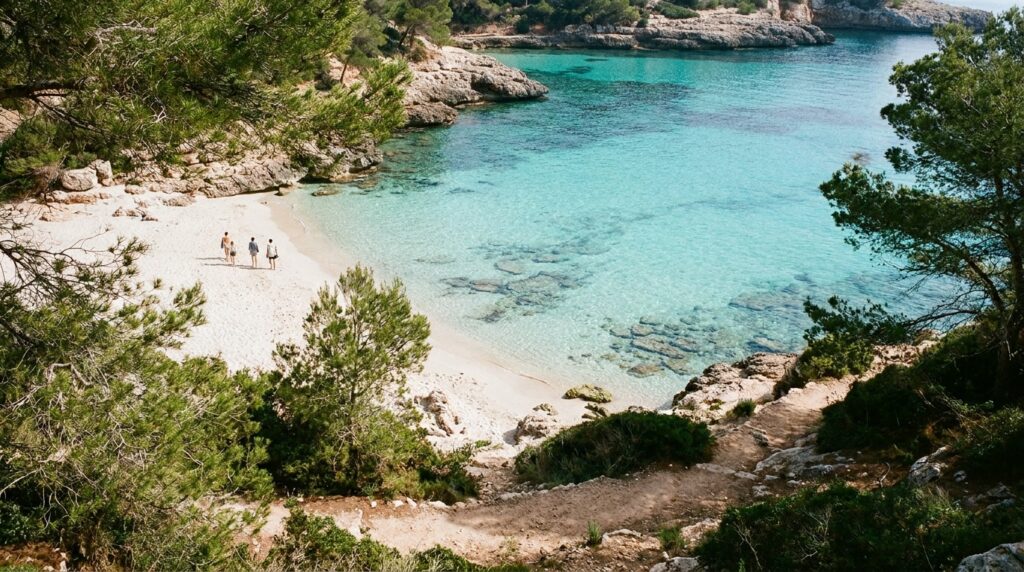 While the southwest beaches become saturated every summer, the eastern coves maintain a reasonable occupancy level even in August. These are not beaches of sun-lounger rows and beach bars: they are coves of fine sand, transparent water and access on foot from coastal paths.
Some of the most valued by residents:
- Cala Mesquida: White sand, protected dunes and moderate swell. Ideal for families and nature lovers.
- Cala Agulla: Spacious, with basic services and a surrounding pine forest.
- Cala Millor: More urban, with a seafront promenade and full services. The convenient option in the east.
- Cala Varques: Accessed on foot, no services, crystal-clear water. The “secret” cove that is no longer so secret, but remains spectacular.
- Cala Mondragó: Within the Mondragó Natural Park, with twin postcard-perfect coves.
Towns with their own identity
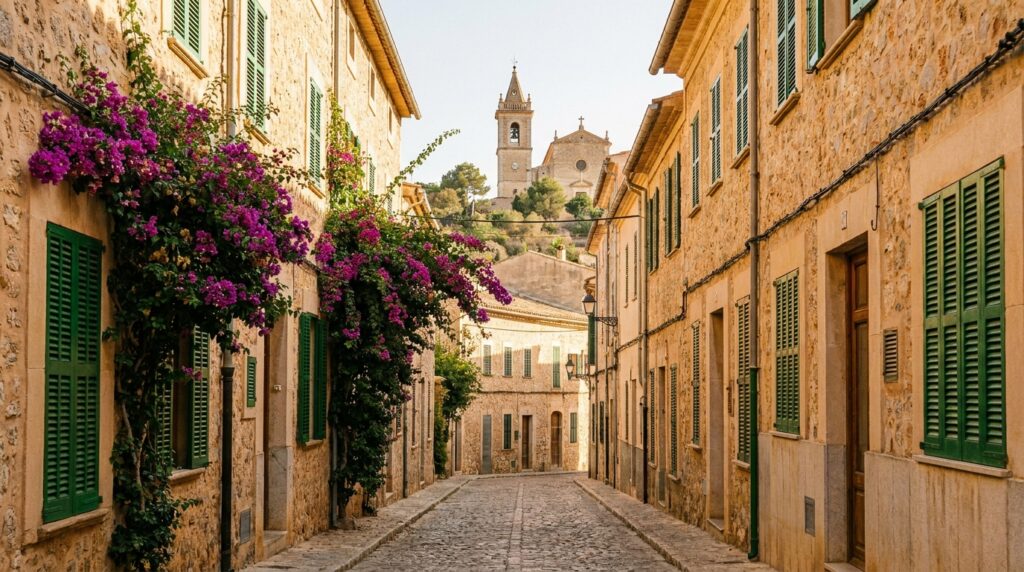
Each town in eastern Mallorca has a distinct character, and that is part of the appeal. They are not replicas of one another:
Artà
A stone-built town with a well-preserved historic centre, crowned by the Santuari de Sant Salvador. An active cultural life, Tuesday market, strong dining scene and an integrated international community. Arguably the town with the most personality in the east.
Capdepera
Dominated by its medieval castle with views to the coast. More understated than Artà, but with its own charm and direct access to Cala Ratjada and its coves.
Son Servera
An inland town with good connections to the coast (Cala Millor, Cala Bona). A wide range of services, a Friday market and a quiet residential setting. Highly valued by families.
Porto Cristo
The best-known coastal town in the east, with its own harbour and access to the Drach Caves. More tourist-oriented than the others, but with a life of its own outside high season.
The profile of those who choose the east
Eastern Mallorca attracts a different type of resident from the southwest. Not someone seeking the glamour of Puerto Portals or the nightlife of Magaluf. Someone looking for space, nature, community and a setting where children can grow up outdoors.
This profile includes:
- European families (German, British, Scandinavian) seeking quality of life without excess.
- Remote professionals who need good internet and an inspiring environment.
- Active couples who value hiking, cycling, the sea and local gastronomy.
- Retirees wanting a mild climate, accessible healthcare and a welcoming community.
Property in the east: quality without artificial inflation
The real estate market in eastern Mallorca offers a significantly better quality-to-price ratio than the southwest or Palma. New developments in this area combine contemporary architecture, quality materials and privileged locations at prices that, compared with equivalent Mediterranean zones, remain competitive.
International demand is growing, but supply remains contained, generating an attractive appreciation potential without the speculative bubble of more saturated areas.
Frequently asked questions about living in eastern Mallorca
Is eastern Mallorca an isolated area?
No. Palma airport is 45–60 minutes by car from the main eastern towns. There are regular bus connections and the Ma-15 motorway links Manacor directly to Palma. You are not far from anything: you are simply in a quieter place.
Are there good schools in the east?
Yes. There are public and semi-private schools in the main municipalities, with smaller class sizes than in Palma. Some offer bilingual or trilingual education. For international schooling, there are options within reasonable distance.
What is winter like in eastern Mallorca?
Mild. Daytime temperatures rarely drop below 8–10°C, and sunny days are frequent even in January. Social life and outdoor activities continue year-round, just at a slightly slower pace.
Is now a good time to buy in the east?
Eastern Mallorca is in a phase of sustained but non-speculative growth. Prices are lower than in the southwest and international demand increases each year. For buyers with a medium-term outlook, current conditions are favourable.